
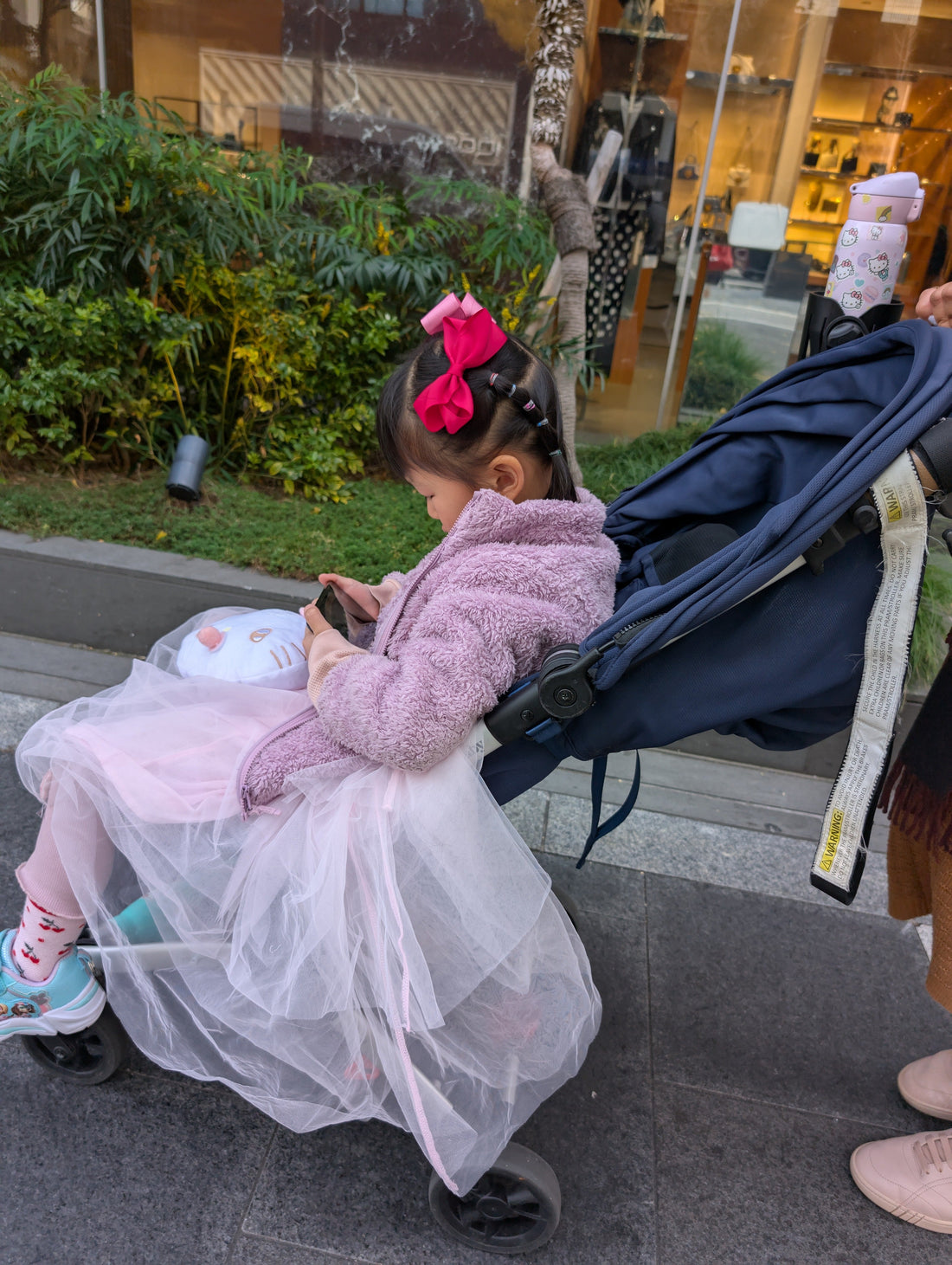
In today’s world, technology plays a major role in keeping young children entertained, especially for busy parents. Whether it’s during long walks, grocery trips, or while enjoying a coffee break, many parents rely on screentime to keep their toddlers calm and occupied in their strollers. However, this growing habit comes with potential impacts on toddlers’ posture and eyesight that many may not be aware of. Let’s dive into the details of how screentime in strollers can affect your child’s physical development and what steps you can take to ensure a healthy balance.
Posture: The Silent Consequence of Poor Screen Habits
Toddlers are still in the early stages of physical development, with their muscles, bones, and posture forming foundational habits. When a toddler holds a screen like a smartphone or tablet in a stroller, they often sit hunched over, their heads tilted downward, and their backs curved. This posture can lead to several short- and long-term issues:
-
Spinal Stress: A toddler’s head accounts for a significant portion of their body weight relative to their size. Holding the head in a downward position for extended periods places strain on their developing spine and neck muscles. Over time, this can contribute to poor posture and even chronic issues as they grow older.
-
Slouching Habits: Repeatedly sitting in a slouched position can train a toddler’s body to adopt poor posture as their default. Once this habit is formed, correcting it becomes more challenging as they age.
-
Delayed Core Development: Sitting upright and unsupported helps toddlers engage their core muscles, which are crucial for overall stability and motor development. When toddlers are slumped over a screen, these muscles are underused, potentially delaying their strength and coordination.
How Screentime Impacts Toddlers’ Eyesight
Vision problems related to screentime are another concern for toddlers. Although devices may seem harmless in small doses, prolonged and improper use can affect their developing eyesight in several ways:
-
Digital Eye Strain: Holding a screen too close for an extended period can cause digital eye strain, even in toddlers. Symptoms may include headaches, dry eyes, and difficulty focusing. Since young children cannot always articulate discomfort, parents may not realize the impact until symptoms worsen.
-
Myopia (Nearsightedness): Studies suggest that extended screentime and lack of outdoor activity are contributing factors to an increasing prevalence of myopia in children. When toddlers hold screens close to their eyes for long periods, it encourages their eyes to focus at a short range, potentially leading to nearsightedness.
-
Reduced Blinking: When toddlers focus intently on a screen, their blinking rate often decreases. Reduced blinking can result in dry, irritated eyes, which may affect comfort and visual development.
-
Disrupted Visual Development: A toddler’s eyes are still learning to coordinate and focus properly. Screens present fast-changing visuals and high-contrast images that may interfere with natural visual development, particularly when viewed up close.
Tips to Minimize the Risks of Screentime in Strollers
-
Adjust Screen Positioning with the Stroller Mate Traveller: Ensure that screens are positioned at eye level to prevent toddlers from looking downward for extended periods. This simple adjustment can significantly reduce neck and spinal strain.
-
Use Hands-Free Accessories: A phone or tablet holder designed for strollers can help maintain the screen at an appropriate height and distance. This keeps toddlers’ hands free and promotes better posture.
-
Limit Screentime Intervals: Instead of allowing continuous screentime, break it into short intervals. For example, let your toddler watch a short video and then engage them with a toy, book, or a conversation about what they see around them.
-
Encourage Regular Movement: Incorporate breaks during stroller rides to let your toddler stretch, move, and play. Even a quick stop at a park can make a big difference.
-
Prioritize Outdoor Play: Ensure your toddler gets plenty of time outdoors, which not only promotes physical activity but also supports healthy visual development. Exposure to natural light is believed to reduce the risk of developing myopia.
-
Model Healthy Habits: Set an example by limiting your own screentime and maintaining good posture. Toddlers are highly observant and often mimic the behavior of their parents.
Finding Balance
Screentime can be a helpful tool for parents, especially during busy moments, but it’s important to strike a balance that supports your toddler’s overall health and development. By being mindful of posture, screen distance, and screentime limits, you can minimize potential risks while still enjoying the benefits of technology.
For parents looking for practical solutions, innovative products like stroller-mounted phone holders are making it easier to align screentime habits with healthy posture and eyesight practices. With thoughtful adjustments and consistent effort, you can help your toddler develop healthy habits that will benefit them for years to come.


