
Why Toddlers Behave Differently in the Pram
Toddlers often seem like different people the moment they are buckled into the pram. At home they might be happy, playful, and relaxed, but once you are out the door they turn fussy, clingy, or suddenly wild. This shift is stressful on normal walks, and it can feel even bigger on longer outings, holidays, or airport days when everyone is already tired.
There is actually a clear reason this happens. Pram behaviour is shaped by a mix of confinement, changing sights and sounds, and how much attention they feel from us. When we understand what is going on for them, we can set up outings so they feel calmer and more secure, and we feel less stressed. One simple way to do that is with a stroller travel accessory that keeps toddlers comfortable and occupied in a healthy, posture-friendly way.
What Changes for Toddlers When They Are in the Pram
From a toddler’s view, being put in the pram is a big shift. One second they can run, climb, and grab what they want; the next they are strapped in and rolling through the world with almost no control.
That loss of freedom can show up as:
- Frustration and whining
- Reaching and grabbing for anything nearby
- Constant requests for snacks, toys, or cuddles
- Sudden tantrums when you stop or change direction
There is also a strong sensory shift. Out on August’s late-winter days in Australia, pram rides can feel very different from being at home on the rug. On some days there are bright lights in shopping centres, crowds, loudspeakers, and echoing car parks. On others, it is quiet, cold, and a bit grey, and there is not much to look at from the pram seat.
Both ends of that scale can be hard:
- Busy streets or airports can feel overwhelming
- Quiet paths can feel boring and empty
- Wind, rain, or low winter sun can make them uncomfortable
- New places can feel strange or a bit scary
Toddlers are also very tuned in to us. When we are pushing a pram, we are often focused on the list in our head, travel check-in, directions, or our phone. Our eyes and words are not on them as much. For a little person who usually has our full attention, this can feel like a sudden drop in connection, and acting out becomes a way to pull us back in.
The Science Behind Pram Meltdowns and Screen Requests
Toddler brains are still learning how to handle big feelings. Self-regulation, that inner skill that lets us wait, calm down, or manage boredom, is only just getting started in these years. Sitting in a pram, strapped in and told to wait, is pretty much the hardest test of that skill.
When they are stuck for longer periods, like regular school runs, winter errands, or long walks through the airport, it is normal for them to struggle with:
- Boredom and restlessness
- Waiting for food or a change of scenery
- Sharing a parent’s attention with jobs and travel tasks
This is where routine helps. When toddlers know what to expect, they tend to relax a little. Clear patterns, like “first we walk to the shops, then you can watch a show in the pram on the way home,” can lower the chance of meltdowns because the boundary is predictable.
Screens have a special pull in the pram because they tick a few boxes at once:
- Instant visual stimulation when the world around them feels dull or too full
- Familiar shows or apps that feel safe and known in busy places
- A sense of control when they can see and hear something they enjoy
So when a toddler in a pram is begging for a phone, they are not being “naughty,” they are looking for comfort, control, and something to do.
Turning Screen Time Into Posture-Friendly Calm
Many parents feel torn about offering screens in the pram. We want peaceful outings, but we also worry about screen time. It helps to think of pram screens as a tool we can use mindfully, with clear limits, instead of something that “takes over.”
The way screens are held really matters for little bodies. When toddlers clutch a phone, they often hunch forward, look sharply down, and tense their fingers. On bumpy winter footpaths or long walks through big car parks, that repeated posture can put strain on small necks, shoulders, and hands.
A healthier setup is one where:
- The device is at eye level, so their head can stay upright
- Their hands can rest on their lap or blanket
- The screen is steady, so their eyes are not chasing a wobbling picture
A hands-free stroller travel accessory that holds the device for them supports this. It lets the screen be a calming tool instead of a physical strain, and it cuts down on the cycle of dropping the phone, crying, handing it back, and starting again.
How a Stroller Travel Accessory Supports Smoother Outings
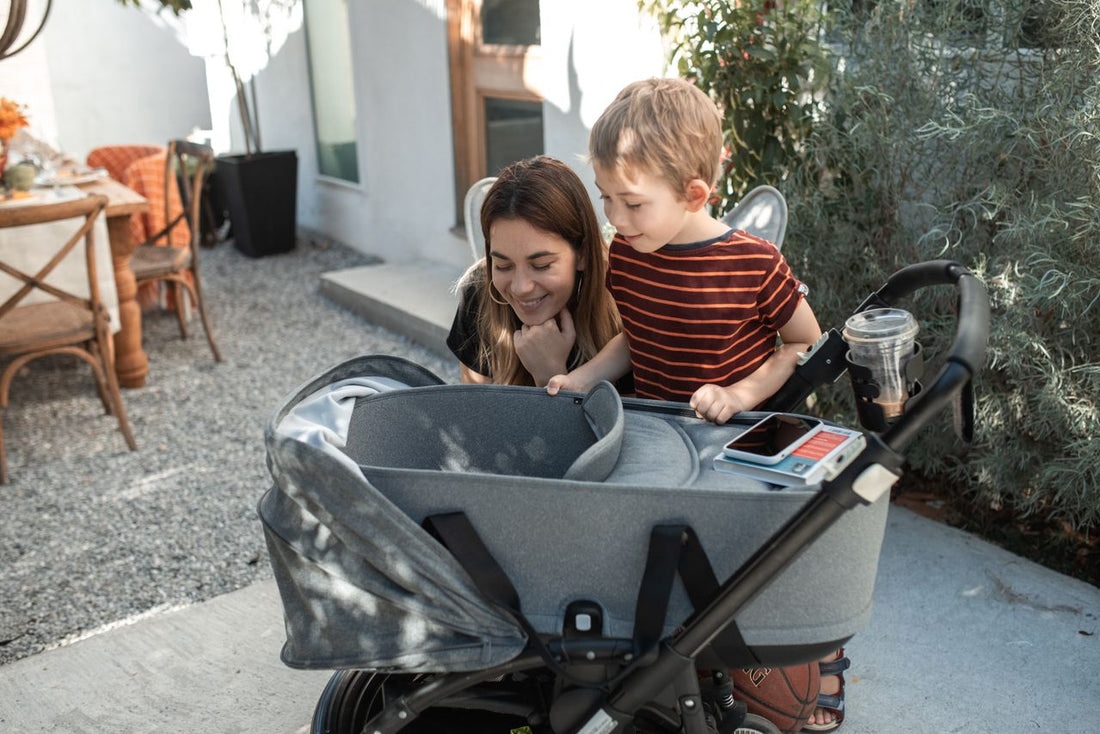
This is where a simple product choice can change the whole feel of a walk. The Stroller Mate Traveller is designed to clip securely onto most prams and strollers, so the device sits steady, visible, and out of little fists.
For toddlers, that means:
- Less twisting and leaning to see the screen
- Less grabbing and yanking at your phone
- A clear, stable view that helps them settle and watch calmly
For parents, a stroller travel accessory brings practical benefits too:
- Fewer dropped or cracked devices on hard winter pavements
- Free hands to steer, carry shopping bags, or manage luggage at the airport
- A set spot for the device, instead of juggling it between pockets, cup holders, and tiny hands
During August travel and city outings, when coats, bags, and extra gear already make everything feel bulky, one reliable setup point on the pram can make the whole outing feel more organised and calm.
Simple Strategies to Use Screens Without the Struggle
A calmer pram routine is not just about the hardware, it is also about the rules we build around it. Screens tend to work best on the go when they are special, short, and clear.
Some helpful approaches are:
- Choose short, purposeful content only for pram time, like a favourite show, a gentle story app, or a simple learning game
- Keep that content “pram-only,” so it feels like a treat linked to travel, not something they expect all day
- Use screens at known tricky times, like the last part of a long shop, not from the very first minute
Pairing the phone holder with other simple comforts helps too:
- Snacks that are easy to eat in the pram
- A comfort toy or blanket tucked in beside them
- Chatting about what you both see, even while the show is off
- Regular breaks where they can hop out, walk, and stretch
Clear limits are your friend here. Let your toddler know when the screen will go on and off, and stick with it. Simple phrases like “when we get to the park, the show finishes” plus a short countdown can reduce fights and tears. Keeping pram screen time separate from at-home routines also stops arguments about phones in every corner of the day.
Make Every Pram Ride Easier From Today’s Walk Onward
When we see pram behaviour as communication, not just “bad behaviour,” it becomes easier to respond with empathy instead of frustration. Your toddler is telling you they feel trapped, bored, overstimulated, or disconnected. Small tweaks to their setup, the routine, and the tools you use can make a big difference to both of you.
At Stroller Mate, we created the Stroller Mate Traveller to answer exactly these everyday challenges for families here in Australia. A purpose-designed stroller travel accessory can support calmer toddlers, better posture, and less stress whether you are on a quick winter errand, a shopping centre run, or an airport adventure. With a pram-ready travel kit that includes warmth, snacks, comfort, and a safe, hands-free screen setup, every ride can start with more comfort and calm in mind.
Make Your Next Family Trip Smoother And Stress Free
Travelling with a pram should feel easy, organised and calm, which is exactly why we created our stroller travel accessory. Designed to simplify airport transits and days out, it keeps everything you need close at hand so you can focus on your little one, not your gear. If you have any questions about fit or features, simply contact us and we will help you get set up with the right solution from Stroller Mate.


