
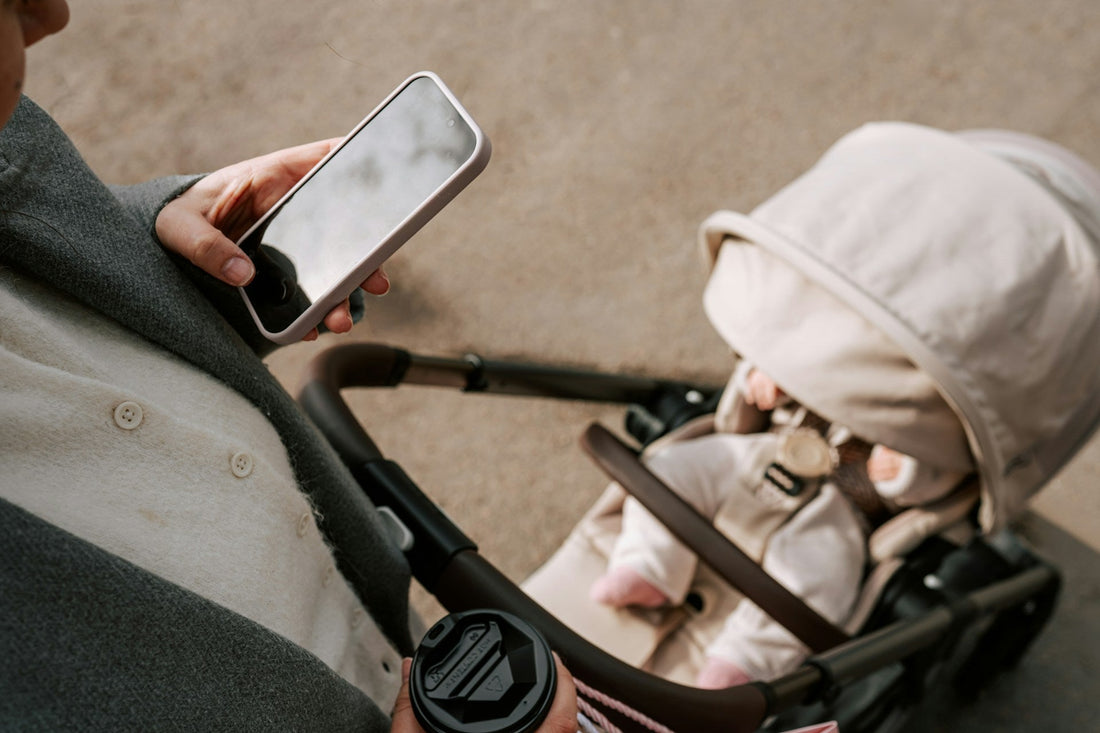
Make Every Walk Count: Rethinking Screens and Strollers
Pram walks can be the best part of the day. The air is warm but not too hot, the late-summer light is softer, and everyone is a bit less cranky once you are moving. For many families in Australia, those walks also come with something else: a phone playing a show to keep a restless toddler calm.
That is where the questions start. Is it better if the child holds the phone, if the parent holds it, or if the screen is mounted on the pram? What does each choice mean for attention, interaction, posture, and safety on the path or footpath? We want to unpack those tradeoffs so pram screen time feels like a conscious choice, not something to feel guilty or confused about.
How Pram Screen Time Shapes Your Child’s Attention
Pram screen time can honestly help. On long walks to the shops, on the school run with older siblings, or during laps around the block while trying to get naps happening, a short show can mean the difference between a calm cruise and a loud meltdown.
Each way of using the phone affects your child’s attention in a different way:
- Phone in your child’s hands: They tend to lock in. The focus is intense and narrow, which can be handy when you need quiet, but it can also mean they barely look up at the real world.
- Parent handheld: Your attention is half on the screen, half on the path, and half on your child, which is already too many halves. The child often keeps glancing up at you, then back to the screen, looking for cues.
- Pram-mounted screen: The viewing is more stable and predictable. The screen stays at the same spot, so you can keep an eye on what is playing and how long it has been on, without juggling it in your hands.
We can also shape attention in simple, practical ways:
- Use short “screen blocks” instead of one long session
- Choose calmer, slower content rather than loud, frantic clips
- Build in “screen-off” moments to look for birds, cars, dogs or trees
- Treat the screen as one tool among many, not the whole walk
A nice rhythm on longer autumn walks can be something like: a bit of chatting, a short screen block, then a break to look around and talk about what you both see.
Parent-Child Interaction on Walks: Help or Hindrance
Walks are perfect low-pressure connection time. You are both facing the same way, the movement is soothing, and there is always something to talk about: a noisy truck, crunchy leaves, a barking dog, the sky changing colours.
Handheld phones can quietly cut a lot of that out. When a toddler is clutching a phone, they tend to hunch over it. The chance for back-and-forth chat drops, along with those little moments of pointing things out, naming what you see and sharing reactions.
When a parent is holding or watching the phone, it is easy to stop commenting on the world and just zone out.
With a pram phone mount, the setup is different. Your hands stay free on the handle. You can:
- Gesture and point to things around you
- Keep your push steady and safe
- Catch your child’s eye more easily
- Switch between chatting and letting them watch without juggling the phone
Some simple interaction ideas while a screen is on:
- Narrate what is on the screen: “That is a big red bus”
- Link it to the real world: “Can we spot something red out here?”
- Pause the video for tiny “look around” breaks
- Use these walks as “top-up connection time”, especially on busy days
That way, pram screen time does not replace connection; it just shares the space with it.
Safety and Posture: the Hidden Costs of Handheld Use
Safety is the quiet part we do not always think about until there is a near miss. Handheld phones can bring in extra risks on walks, for both kids and parents.
For children, handheld screens can lead to:
- Dropping the phone on their face or over the side of the pram
- Sudden lunges forward to grab the phone if it slips
- Fights over holding the phone at road crossings or ramps
For parents, trying to keep a child settled while managing a phone often means:
- One-handed pushing, especially on uneven paths
- Awkward wrist angles or tight grips to stop the phone falling
- Divided attention near driveways, crossings or crowds
Posture matters too. A toddler bent over a phone can end up with a hunched back and twisted neck, especially if this happens on walk after walk. Holding a phone for a long stretch can also be tiring for small hands and arms.
A fixed screen, set at a better height, can support a more natural eye line. An ergonomic pram phone mount can help move the gaze up from the lap toward the horizon of the walk. For parents, having both hands on the handlebar keeps steering more stable and helps reduce the chances of veering off course or tripping while scrolling.
Comparing Phone Mounts and Handheld Use on Real Walks
It helps to think through some everyday outings and how each setup plays out.
On the school run or childcare drop-off:
- Handheld: you might be swapping the phone between kids, or your child may cling tightly to it when you need them to hop out.
- Mounted: the screen stays with the pram, so transitions in and out can be a bit smoother.
On shopping centre trips:
- Handheld: more chances of drops, bumps, and arguments over volume.
- Mounted: easier for you to change content, adjust volume and keep the phone secure while weaving through crowds.
On park strolls or weekend family walks:
- Handheld: the phone can turn into the centre of the outing, which might make it harder to put away when you reach the playground or grass.
- Mounted: you can angle the screen, reduce glare in bright late-summer sun, or simply click it off when it is time to run and climb.
Key tradeoffs to think about:
- Who controls the content and volume?
- How easy is it for your child to grip and not drop the phone?
- Can you see the screen clearly enough to know what is playing?
- How quickly can you switch it off when you need full focus, like at a crossing?
A dedicated, adjustable pram phone mount, like the one we design at Stroller Mate, is built to support safer pram screen time by securing the phone, keeping it at a comfortable viewing level and freeing you up to steer, watch traffic and keep the chat going.
Smart Screen Habits for Happier Autumn Walks
Pram screen time does not have to be all or nothing. It can simply be one part of your walk routine, used with a bit of thought and flexibility.
You might like to try a loose “walk screen plan”, such as:
- First part of the walk: no screen, just chatting and pointing things out
- Middle stretch: short, calm screen time block
- Last part: screen off again to wind down before home or your next stop
Some simple habits can make a big difference:
- Use a pram phone mount when you do choose to use screens
- Keep the volume low enough that both you and your child can still hear traffic, bikes and people around you
- Pick content that is gentle and easy to pause without drama
- Treat walks as mini connection pockets, even if a screen joins you for part of the trip
It can help to experiment. Try a few outings with handheld phones, then a few with a secure mount. Notice your child’s mood, posture and how often you both look up and around. At Stroller Mate, our aim is to help everyday walks feel safer, calmer and more enjoyable for both you and your toddler, so pram screen time supports your outing instead of running it.
Support Calmer Pram Walks Without Compromising Development
If you are ready to make outings easier while keeping screens in check, we have designed a simple way to manage pram screen time more intentionally. At Stroller Mate, our focus is on giving you flexible tools that fit real-life parenting, whether it is quick trips to the shops or longer walks.


