
Keep Their Neck Happy While You Keep Moving
Stroller screen time can be a lifesaver when we are out doing errands, school runs or standing in a long queue. A short show or a favourite song can turn a grumpy wait into a quiet ride, which helps everyone get through busy days with less stress. As the weather cools in autumn and we spend more time walking to school, sports and weekend outings, screens often become part of our regular pram routine.
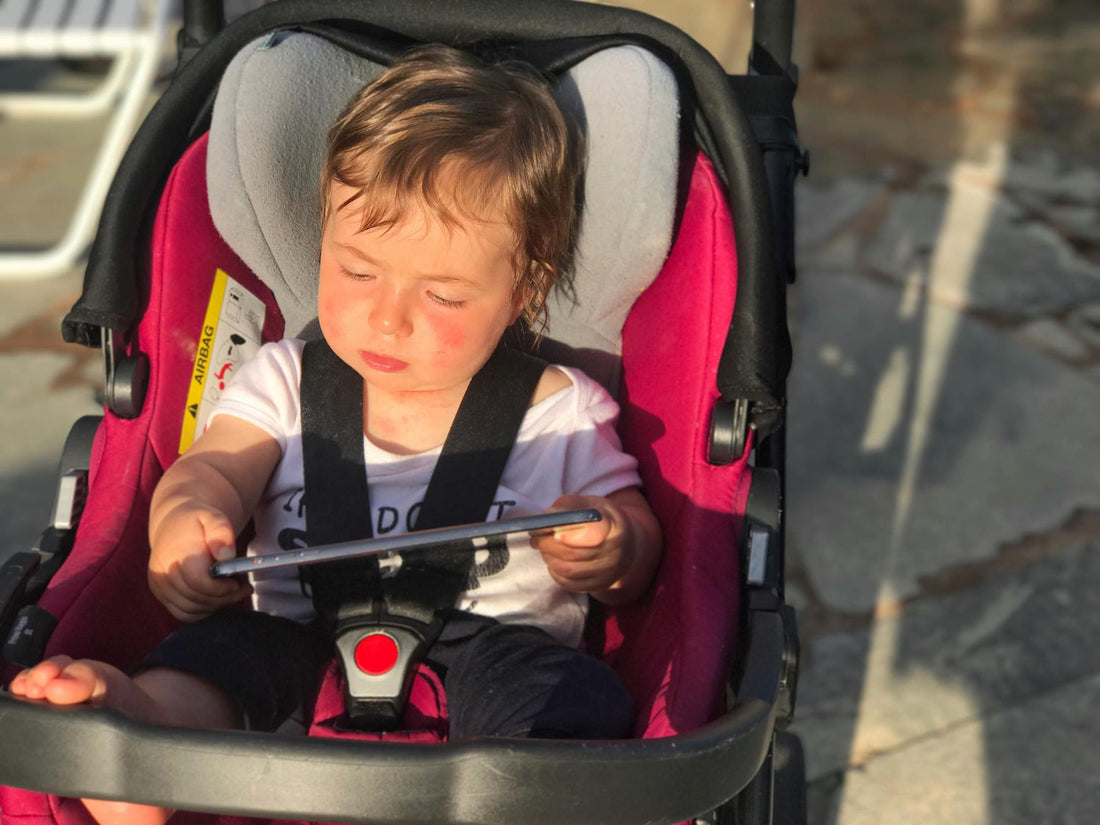
There is a hidden catch, though. When toddlers stare down at a phone in their hands, they often hunch over and tuck their chin toward their chest. That extra bend in the neck might not look like much, but over a whole school run or a longer walk, it can leave them sore, cranky and less settled. The good news is that a few simple habits around distance, height and breaks can make stroller screen time more comfortable and kinder on their growing bodies.
By keeping the screen at a better distance, raising it closer to eye level and building in short breaks, we give little necks and eyes a chance to rest. A secure stroller phone holder also makes this much easier, because it takes the device out of tiny hands and keeps it in one stable, ergonomic spot while we keep moving.
Why Posture Matters Even in the Pram
When a screen is too low or close to their lap, toddlers naturally crane forward. Their head tips down, their shoulders round and their back curves like a banana. This is sometimes called tech neck, and even young children can fall into this posture very quickly when they are caught up in a video.
That hunched position can lead to:
- A stiff neck or sore shoulders after longer outings
- Headaches or grumpy moods once the ride is over
- Less space for deep breathing because the chest is squashed
- More wriggling and whining because they just cannot get comfy
A neutral spine looks very different. The head sits over the shoulders, the chin is not pushed too far down and the shoulders are relaxed instead of pulled forward. When toddlers sit like this, it is easier for them to breathe, watch their show and still glance around at the world outside the pram.
In real life though, a lot of things get in the way. Shopping bags on the handlebar, rain covers, sun shades and blankets can all push us to hold the phone at odd angles. We might twist our wrist around the pram strap, rest the phone on one knee or keep shifting it as we walk. A stable, adjustable mount gives the screen a proper home, so we are not stuck in these awkward set-ups. It also helps us build good posture habits early, which can carry across to car seats, couches and later on, school desks.
Smart Viewing Distance for Little Eyes
Distance is one of the quiet heroes of healthy stroller screen time. For most toddlers, a child-friendly viewing distance means the screen is at least an arm’s length away, and often a bit further for older toddlers. When the screen sits in this range, their eyes can relax instead of working extra hard to focus.
Holding a phone right up close can cause:
- More eye strain and tired eyes
- Extra squinting or frowning to see details
- Less blinking, which can leave eyes feeling dry
- A narrow tunnel of attention, so they look up and engage less
When we are pushing a pram with one hand, it is very easy to drift the phone closer to their face without noticing, especially on bumpy paths. On the school run, at weekend markets or during long airport walks before Easter holidays, that slow creep in distance can build up over time.
An adjustable stroller phone holder helps keep the screen in a safe, steady spot. Once we set a good distance, it stays there, even when the footpath is rough or we switch hands. That stable set-up means we are not stuck guessing if the screen has slipped too close every few minutes, and our child gets a more consistent, comfortable view.
Eye-level Placement to Prevent Craning and Slouching
Height matters just as much as distance. The ideal spot for a stroller screen is at or just below eye level. This lets toddlers look forward, with only a slight downward gaze, instead of tipping their whole head down toward their lap.
Eye-level placement helps by:
- Reducing how far the neck has to bend
- Encouraging a more upright, relaxed posture
- Making blinking more natural, which can help prevent tired eyes
- Lowering the effort needed to stay focused on the screen
Trying to DIY this can be frustrating. Many parents end up balancing the phone on the stroller bar, wedging it in a cup holder or tucking it into the side of the seat. These tricks often slip as soon as we hit a kerb, and we find ourselves stopping again and again to fix the angle. It can also feel unsafe if the phone is wobbling above their lap.
An ergonomic stroller mount makes these adjustments simple. We can quickly tweak height and angle to match our child’s size, how bulky their winter jacket is, or whether they are more upright or reclined for a nap. From city footpaths to leafy suburban streets across Australia, a secure holder keeps the screen steady while we walk, rather than bouncing and sliding out of reach.
Building Healthy Screen Break Routines on the Go
Even with great distance and eye level, breaks are still important. Short viewing blocks with planned pauses give eyes, neck and brain a chance to reset. For toddlers, this might mean around 10 to 15 minutes of screen time followed by a little screen-free stretch.
Break ideas can be simple:
- Play “spot the colours” with cars, flowers or shop signs
- Count dogs, buses or bikes along the footpath
- Sing a favourite song together
- Offer a snack and chat about where you are going
Some signs that it is time for a break include rubbing eyes, slouching lower in the seat, asking for the volume to go up or starting to wriggle more. We can use a quiet timer on our phone, the length of a song or natural stops like playgrounds and cafes to mark break times.
When the phone is fixed to the stroller holder instead of in little hands, breaks are smoother. We can pause, tilt or darken the screen without a tug-of-war, which helps show that stroller screen time has a clear on and off rhythm. Over time, kids learn that screens are just one part of the outing, not the whole event.
Making Stroller Screen Time Safer and Easier Today
Healthy stroller screen time comes down to three simple pillars: keep a safe distance, set the screen near eye level and build in regular, predictable breaks. When we focus on these, pram trips often feel calmer, with fewer meltdowns from sore necks, tired eyes or sheer boredom.
The busy autumn stretch of school terms, sports runs and family travel can make screens feel like the only way to get from A to B in peace. By checking our current set-up and asking a few quick questions, we can make those rides more comfortable. Is the screen too close? Is it sitting too low in their lap? Have we gone a long way without a break?
Trying even one change on the next outing, like raising the screen a little or planning a short game between episodes, can make a big difference. A well-designed stroller phone holder, like the ergonomic design we focus on at Stroller Mate, helps lock in these healthier viewing habits by keeping the device stable, hands-free and kinder on little necks and eyes while we are on the move.
Support Calmer Outings With Smarter Screen Use
If you are looking for a practical way to balance comfort and stroller screen time, we have designed Stroller Mate to help make your walks and errands smoother for everyone. Our setup keeps devices secure and at the right height so you can focus on connection, conversation and the world around you.


